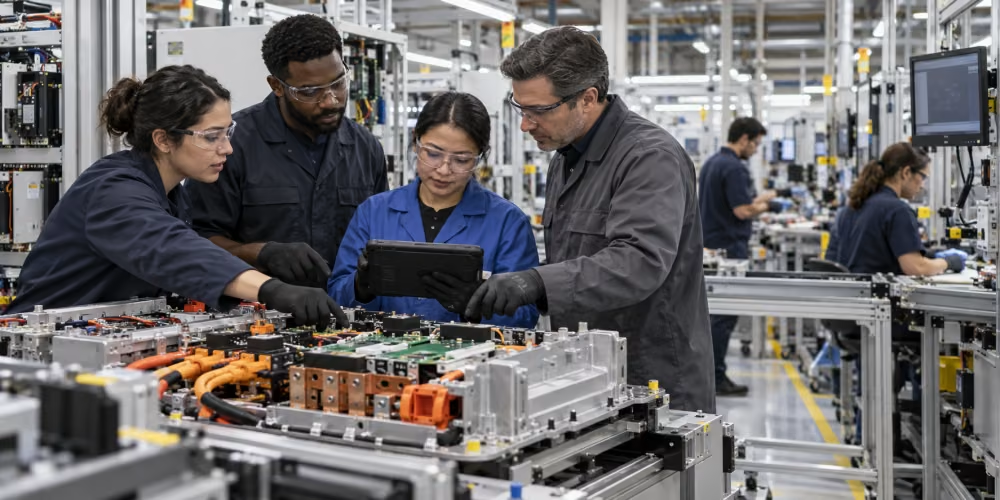
The planned 400-plus jobs will span an increasingly connected environment of electronics production, automation, research, logistics, and workforce training.
Power Electronics has broken ground on a 53-acre manufacturing campus in Houston that is expected to create more than 400 jobs. The planned facility will bring production, electronics manufacturing, logistics, research and development, training, and corporate functions together at one location.
The project includes two buildings totaling approximately 850,000 square feet. Once fully operational, the campus is projected to provide up to 40 gigawatts of annual production capacity for power-conversion equipment serving solar energy, battery storage, data centers, electric mobility, and industrial applications. It is also designed to become the company’s most automated inverter production site. Power Electronics(Opens in a new tab/window)
For the electronics workforce, the scale of the project is significant, but so is the range of capabilities housed on the campus. Advanced production and research will operate alongside logistics and training, pointing to hiring needs that are likely to extend beyond traditional assembly roles. Technicians, engineers, quality specialists, maintenance personnel, material handlers, and production leaders may all contribute to the operation as it develops.
Automation will shape that workforce rather than eliminate the need for it. Highly automated electronics facilities still depend on employees who can operate and troubleshoot equipment, monitor production data, maintain process discipline, and work across manufacturing and engineering teams. Those requirements make technical training, hands-on experience, and adaptable problem-solving increasingly important hiring considerations.
The company has not yet disclosed the specific job mix or hiring timeline, so the workforce impact remains a projection. Still, the inclusion of dedicated training functions in the campus plan creates an opportunity to build skills alongside production capacity. Regional colleges, training organizations, and workforce partners should watch for emerging role requirements and prepare pathways aligned with power electronics, automation, quality, and industrial maintenance.
The Houston project reflects a broader hiring trend in U.S. electronics manufacturing: new facilities increasingly need multidisciplinary teams capable of supporting both sophisticated equipment and rapidly growing end markets. Employers that define those competencies early and engage education partners before hiring accelerates will be better positioned to turn new factory capacity into reliable production.
Source note
The primary source is Power Electronics’ September 24 announcement(Opens in a new tab/window). Additional reporting was provided by pv magazine USA(Opens in a new tab/window) and Intersolar & Energy Storage North America(Opens in a new tab/window).